The Architecture of Access: How Nikki Jardin is Redesigning the Reading Experience for Dementia

An Interview with Nikki Jardin of Mirador Magazine

Welcome to this special edition of the Simon Cares newsletter!
For Nikki Jardin, the journey into the world of dementia was a lesson in how the world "shrinks" when it isn’t designed for you. Her aunt Rebecca was a woman of immense intellect: a trained biologist, pet sitter, and community volunteer who lived for the pages of Smithsonian and National Geographic. But after her diagnosis of young-onset Alzheimer’s, Nikki noticed a painful barrier: the complex scientific layouts and dense columns Rebecca once devoured had become physically impossible for her brain to navigate.
Nikki didn’t just see a grieving reader; she saw a design flaw that was isolating a brilliant mind. Drawing on her own professional background as a freelance writer and managing editor, Nikki founded Mirador. She has spent the last decade pioneering "dementia-friendly" media, utilizing hyper-legible fonts and high-contrast layouts to restore a sense of agency to those living with cognitive change. We sat down with Nikki to discuss how she turned a "collage of confusion" into a beacon of safety, style, and intellectual connection.

Aunt Rebecca
From "Evergreen" to "Mirador": The Search for a Beacon
Rachel: I’m curious how you arrived at the name Mirador. I know the project had a different starting point, how did you find your way to this identity?
Nikki: We originally The Architecture of Access: How Nikki Jardin is Redesigning the Reading Experience for Dementia
An Interview with Nikki Jardin of Mirador Magazine
Welcome to this special edition of the Simon Cares newsletter!
For Nikki Jardin, the journey into the world of dementia was a lesson in how the world "shrinks" when it isn’t designed for you. Her aunt Rebecca was a woman of immense intellect: a trained biologist, pet sitter, and community volunteer who lived for the pages of Smithsonian and National Geographic. But after her diagnosis of young-onset Alzheimer’s, Nikki noticed a painful barrier: the complex scientific layouts and dense columns Rebecca once devoured had become physically impossible for her brain to navigate.
Nikki didn’t just see a grieving reader; she saw a design flaw that was isolating a brilliant mind. Drawing on her own professional background as a freelance writer and managing editor, Nikki founded Mirador. She has spent the last decade pioneering "dementia-friendly" media, utilizing hyper-legible fonts and high-contrast layouts to restore a sense of agency to those living with cognitive change. We sat down with Nikki to discuss how she turned a "collage of confusion" into a beacon of safety, style, and intellectual connection.
Aunt Rebecca
From "Evergreen" to "Mirador": The Search for a Beacon
Rachel: I’m curious how you arrived at the name Mirador. I know the project had a different starting point, how did you find your way to this identity?
Nikki: We originally called the publication Evergreen as a nod to our Pacific Northwest roots. But I quickly found out there are about 17 other magazines with that name!
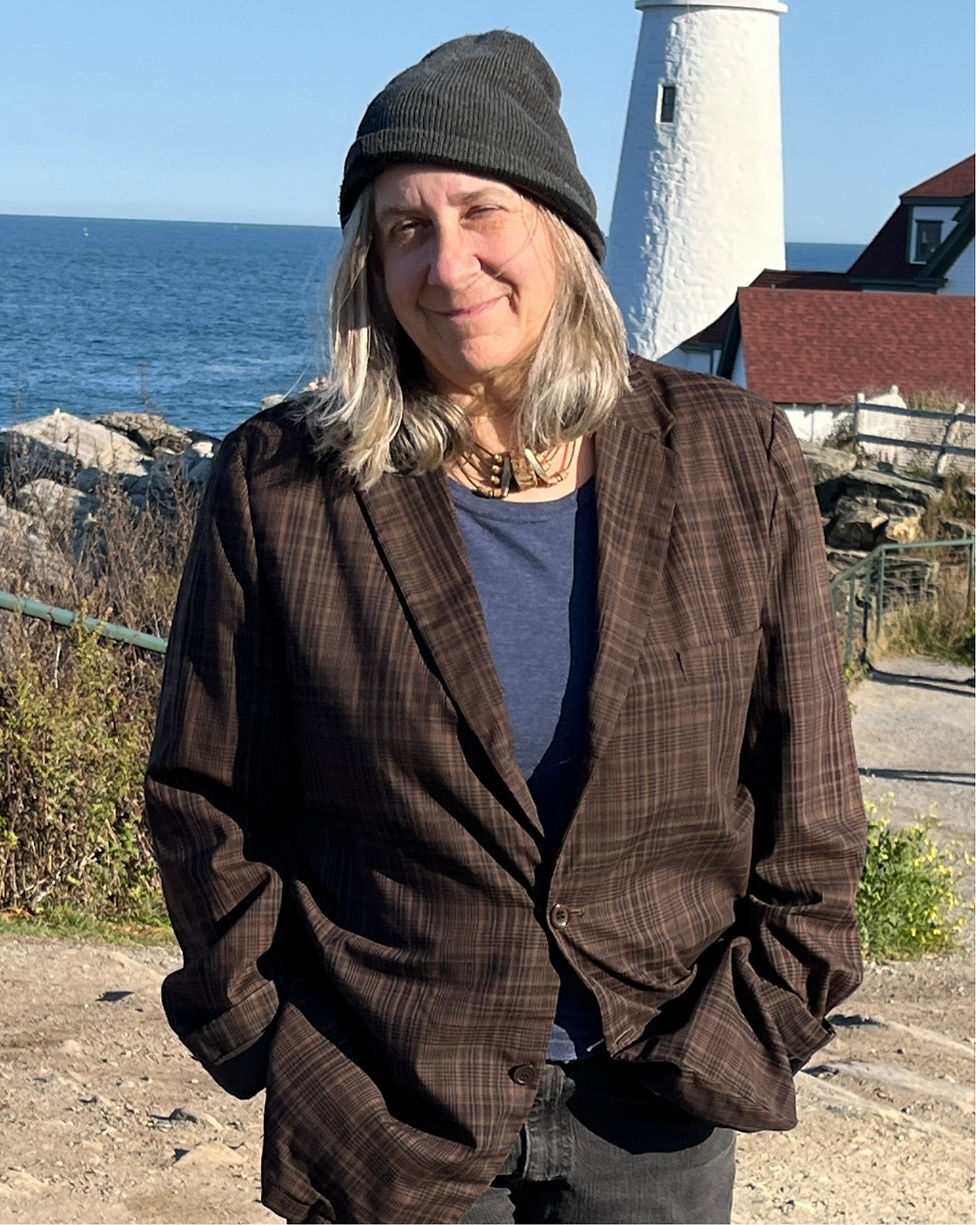
I’ve always loved lighthouses, I even volunteer at one locally, but "Lighthouse" was also taken. I eventually found the Spanish word Mirador. It translates to a vista, a lookout, or a beacon. It felt perfect because I wanted the magazine to be a place of safety…a "view" into the world that remained accessible even when other doors were closing. It’s also a tribute to my late aunt Sharon, a bilingual Spanish speaker and our family genealogist. I think she would have loved the name and the mission.
The Science of Seeing: Decoding the "Collage of Confusion"
Mare: With your background in editorial and publishing, you already knew how to make a magazine. But how did you adapt that for the "dementia eye," especially knowing your aunt had such a sharp, biological background?
Nikki: Because Rebecca was a biologist, I knew her brain was still wired for information and discovery; she just couldn't access it the old way. When I realized she was struggling, I went to a Teepa Snow seminar. I learned that dementia actually affects visual acuity, specifically how the brain processes and filters what the eyes see. It’s not just about "blurry vision"; it’s about the brain’s ability to distinguish a word from a background.
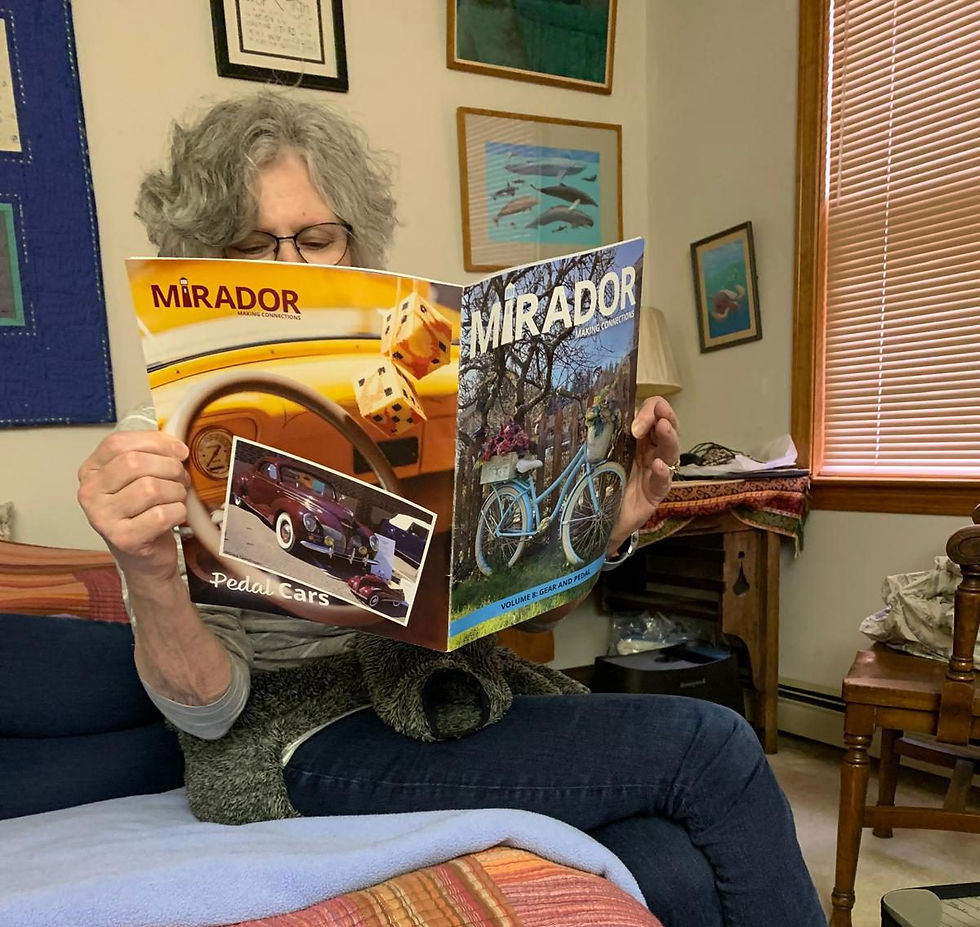
As an editor, my first concept was actually way too crowded. I wanted a "visual feast," but for someone with cognitive decline, it was just noise. We began working with DEEP (Dementia Engagement and Empowerment Project) in the UK to understand best practices. We eventually switched to a font called Atkinson Hyperlegible, developed by the Braille Institute. It focuses on letterform distinction to increase character recognition. It’s a game-changer for clarity.

The Power of "Co-Attending"
Rachel: You’ve mentioned that Mirador isn't just for independent reading, but for "co-attending." How does that change the dynamic between a caregiver and a loved one?
Nikki: It’s one of my favorite things to see. Many of our readers use it independently, but we also see so many spouses, siblings, and even grandkids reading with their loved one. Because the magazine is formatted to be accessible but the content is still "adult" and interesting, like music history or nature, it removes the "childlike" feeling that many dementia resources have. It gives the family something to talk about that isn't the weather or the diagnosis. It facilitates a connection through shared curiosity, which is something a biologist like Rebecca would have cherished.
The "One Person" Rule and the Fight for Agency
Mare: How has this journey changed your personal understanding of what it means to live with a diagnosis?
Nikki: The biggest lesson is: If you’ve met one person with dementia, you’ve met one person with dementia. You can't address every cognitive need in one magazine, but you can create a standard of accessibility that invites everyone back to the table.
I’ve also learned how much more capable people are than we give them credit for. When I was caring for Rebecca, she felt a lot of shame. Today, I see a vibrant movement of people living with dementia standing front and center as advocates. They are reclaiming their agency, and it’s been incredibly impactful to watch that stigma chip away.

The Mirador Mission
At its heart, Nikki Jardin’s work with Mirador is about reclaiming the right to remain curious. By merging professional editorial standards with neurological research on visual processing, Mirador serves as a bridge between the person and the world they love. It proves that a diagnosis does not erase the desire for a "vista"…it simply requires us to build a better lighthouse.
Connect with Nikki
To explore the issues or bring Mirador to you or a loved one, visit Nikki at:
Website: miradormagazine.com
Instagram/Socials: @miradormagazine
LinkedIn: Nikki Jardin


Comments