Dare to do Dementia Differently: A Conversation with dangle & dot About Living Fully With Dementia

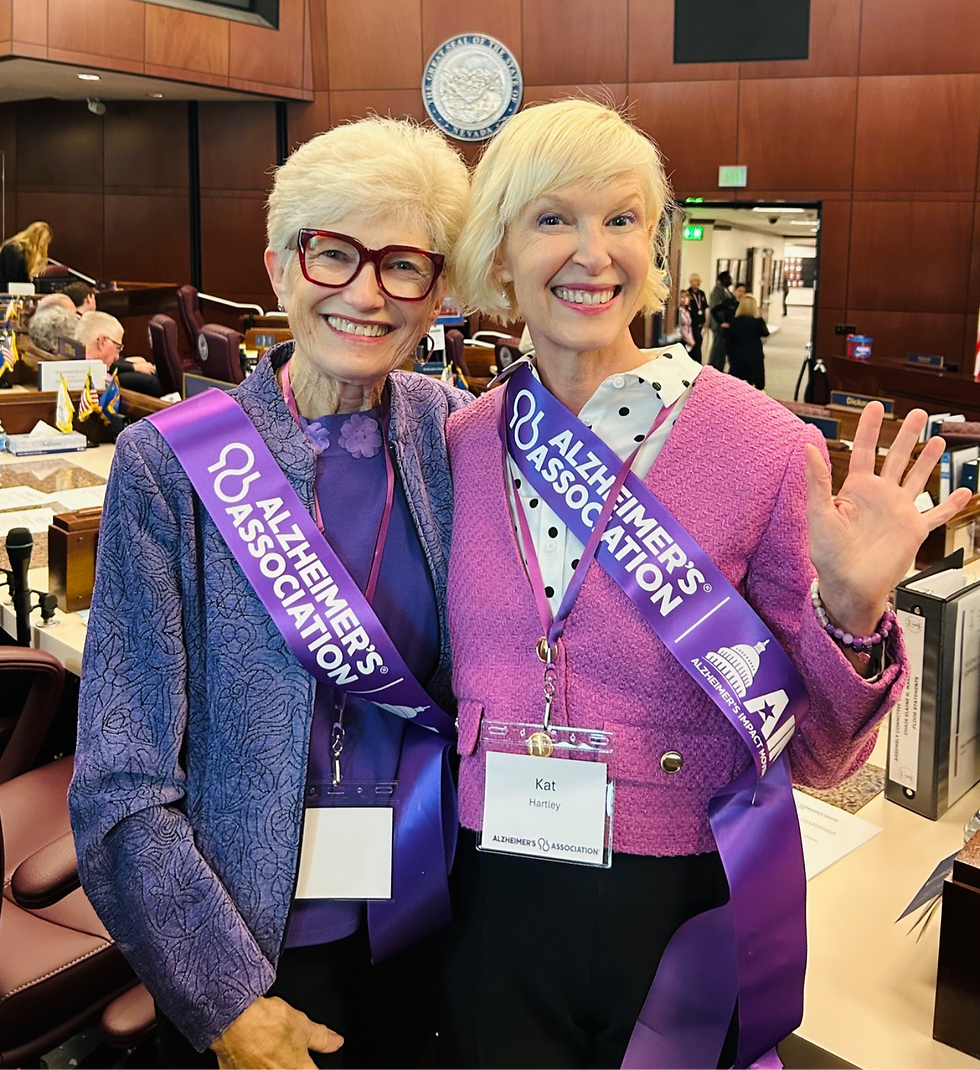
Interview with Nancy Nelson and Kat Hartley of dangle & dot
By Mare Ruland, Simon Health

“Dare to Do Dementia Differently”
When I sat down with dangle & dot, it became immediately clear why their message resonates so deeply within the dementia community.
At the heart of their work is one powerful belief: a dementia diagnosis does not erase identity, dignity, creativity, or purpose.
Our conversation moved through advocacy, caregiving, humor, grief, and resilience — all centered around what it truly means to “dare to do dementia differently.”
Q: First, can you introduce yourselves and share how dangle & dot began?
Nancy Nelson:
I was diagnosed with Alzheimer’s disease 13 years ago and later with mild cognitive impairment. After my diagnosis, I started waking up between 3:00 and 5:00 in the morning with thoughts and phrases running through my mind.
I began writing them down, and eventually those writings became a five-year trilogy of poetry about my experiences living with dementia.
dangle & dot grew from a desire to show people that a dementia diagnosis does not mean life is over. People living with dementia can still contribute, create, work, advocate, and live meaningful lives.
Q: Where did the name “dangle & dot” come from?
Nancy Nelson:
I started wearing mismatched earrings because I kept losing one of them. I’d wear one dangle and one dot.
Over time, I realized they symbolized something much bigger. “Dangle” represents the tangles and unpredictability of living with dementia, while “Dot” represents the grounded, steady care partner.
They need each other, but they are still individuals.
Q: Your slogan is “Dare to do dementia differently.” What does that mean to you?
Nancy Nelson:
None of us chose this journey, but we do get to choose how we respond to it.
There’s such a tragedy-focused narrative around dementia. While grief is certainly part of it, there is also still purpose, humor, creativity, and connection. We wanted to create a different model for what life with dementia can look like.
Humor matters too. Sometimes you have to laugh. Mistakes happen. Hard moments happen. Humor creates space to breathe.
Q: One thing you mentioned that really stayed with me was “Dementia Standard Time.”
Nancy Nelson:
Yes! We joke about DST — Dementia Standard Time.
Things simply take longer sometimes. Conversations take longer. Getting ready takes longer. Processing information takes longer.
The world expects constant productivity and immediate responses, but dementia changes how the brain processes stress and information. People often don’t realize how much energy it took for someone just to show up that day.
Kat Hartley: Caretaking for two family members, taught me the art of “not rushing”. Slowing everything down, including my own thoughts, made for the most present, connected and productive days.
Mare Ruland:
I loved that perspective because society places so much pressure on people to constantly keep up. We often forget how much effort someone may already be putting in behind the scenes.
Q: You’ve both spoken openly about the emotional realities of caregiving. What have you learned through that experience?
Kat Hartley:
Nothing fully prepares you for caregiving emotionally.
I’ve cared for multiple family members at the same time, and even with professional experience, it was overwhelming. You’re trying to manage everyday life while also carrying grief, fear, guilt, exhaustion, and uncertainty.
One of the biggest things I’ve learned is that caregiving is not about fixing the person. It’s about allowing everyone to show-up as they are- including me.
It’s about helping them have the best day possible.
That shift in mindset changes everything.
Q: What advice would you give someone who has just received a dementia diagnosis?
Nancy Nelson:
First — breathe.
Take time to sit with the diagnosis before making rushed decisions. Get a second opinion if needed. Learn about the diagnosis and ask questions.
For families, it’s also important to understand that many behaviors are symptoms of brain changes — not the person intentionally trying to hurt or frustrate you.
Learning how to communicate differently makes a tremendous difference.
Q: One thing I really admired was how strongly you emphasized dignity and independence.
Nancy Nelson:
That’s one of the things I care about most.
I want to continue doing things for myself for as long as possible. I want to remain involved in life.
One of my fears is losing independence or unintentionally saying something hurtful because of brain changes. But dignity matters. Respect matters.
People living with dementia still want purpose, contribution, connection, and autonomy.
Q: What gives you hope right now?
Nancy Nelson:
Seeing people finally talk openly about dementia.
For so long, there was so much shame and silence surrounding it. Now we’re seeing more advocacy, more honesty, and more people living with dementia included in the conversation instead of simply being spoken for.
That shift matters.
Final Thoughts
This conversation with dangle & dot was a reminder that dementia care is about far more than symptoms or diagnoses.
It’s about humanity.
It’s about building conversations and communities that preserve dignity while supporting both caregivers and people living with dementia.
Most importantly, it’s about reminding people that a diagnosis does not erase who they are.
About the Co-Founders

Nancy Nelson (“dangle”)
Co-founder, advocate, and author diagnosed with early-onset Alzheimer’s disease in 2013 and later with mild cognitive impairment. Through poetry, public speaking, and support groups, she shares her lived experience with dementia and represents the “tangles and unpredictability” of the journey.
Kat Hartley (“dot”)
Co-founder, pharmacist, and brain health professional. After losing eight relatives to Alzheimer’s disease, she dedicated her career to advancing dementia research and treatment, including work with the FDA and Cleveland Clinic Nevada. She currently serves as a family care partner for her brother and represents the “steady, grounded care partner.”
Connect with the team here
Support the Mission:


Comments