Dancing for Brain Health: A Conversation with Magda Kaczmarska, MFA

By Mare Ruland

In the often isolating journey of dementia, we are constantly searching for answers. We look to clinical solutions and structured care to find clarity. Yet, some of the most profound breakthroughs aren't found in a textbook or a treatment plan. They are found in the body. They are found in movement, community, and the simple, transformative power of dance.
I recently sat down with Magda Kaczmarska, the founding executive director of DanceStream Projects, to discuss the intersection of science, dance, and human potential. Magda isn't just a dancer; she spent ten years in pre-clinical research as a neuropharmacologist. Her unique path, from bench science to the dance studio, has given her a singular perspective on how we approach brain health.
The Scientist-Dancer Perspective
Magda's career began in the lab, driven by a deep fascination with human biology. After a decade in neuropharmacology, she realized that while the research was essential, she felt a pull to move away from the isolated world of bench science and toward the communities she was studying.
"I have a background both in the sciences and in dance," Magda explains. "I was fascinated with how things work, especially in the human body. But in pre-clinical work, there is very little connection with people."
She made the leap to pursue an MFA in dance, bringing her rigorous understanding of biology with her. Today, she views dance not merely as an art form, but as a biological intervention. "Dance is a superpower," she tells me. "It's not only about expression and community building, but increasingly, we are understanding the powerful evidence of how dance supports different domains of brain health

The Philosophy of Reciprocity
When Magda speaks about her organization, DanceStream Projects, she avoids the language of traditional business. Instead, she speaks of reciprocity.
"I am here because of the generosity of strangers," Magda says, reflecting on her own life as an immigrant and her journey into this field. "I feel it is my responsibility to be of service to the community."
DanceStream Projects prioritizes serving groups that have historically lacked access to specialized care, including immigrant populations, communities of color, and the queer community. For Magda, keeping programs free and accessible isn't just a charitable choice; it is a fundamental rejection of extractive models. She believes in building ecosystems where the community doesn't just survive, but thrives through collaboration rather than isolation.
Changing the Attitude, Not Just the Diagnosis
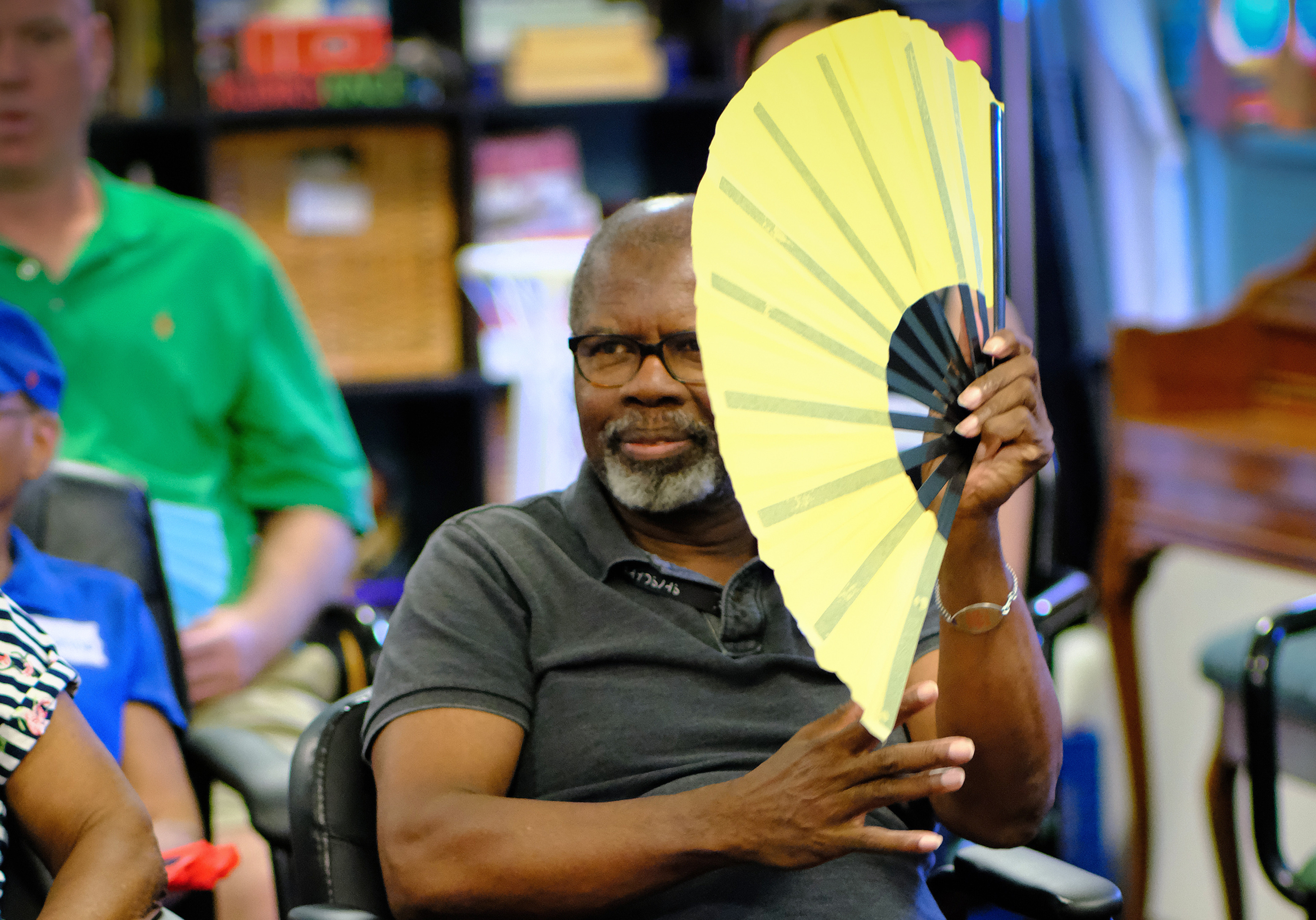
Perhaps the most powerful moment of our conversation was when Magda discussed the "180-degree shift" she witnesses in participants. She shared the story of a participant who arrived at a 12-week program struggling deeply with a new dementia diagnosis and a sense of profound hopelessness.
"Halfway through the program, they made a 180," Magda recounted. "They started to take this newfound confidence and translate it into their life."
That participant moved from isolation to action—engaging with social workers, advocating for their own care, and connecting with support systems they had previously ignored. As Magda points out, while we cannot always change the diagnosis, we can absolutely change the attitude. By shifting the focus from what has been lost to what is still possible through movement, participants rediscover their agency.

Looking Forward: Movement as Connection
Magda's work with action potential networks, the idea that even observing movement can trigger an internal "dance," suggests that the benefits of this work go far beyond physical exercise. It is a way to bridge gaps, regulate emotions, and provide a sense of presence for people who may feel distanced from their own lives.
As I look at how we can integrate educational resources into the dementia care space, Magda's work serves as a reminder: the best resources are the ones that remind us of our humanity. Whether we are building apps, providing checklists, or teaching dance, the goal remains the same: to create spaces where people feel seen, supported, and capable.
Magda's message is clear: we don't have to exist on islands. By collaborating across disciplines, science, arts, and technology, we can build a network of support that is as dynamic and resilient as the communities we serve.
Connect with Magda Kaczmarska
Learn more about her work at DanceStream Projects, or connect with her on LinkedIn.
Magda Kaczmarska is the founding executive director of DanceStream Projects, a nonprofit using dance as a tool for brain health and community connection. Before her work in dance, she spent a decade in pre-clinical neuropharmacology research. She holds an MFA in dance and is dedicated to making movement-based programming free and accessible to underserved communities.


Comments